12 High-Converting Real Estate Advertising Examples for 2026
In today's competitive market, generic real estate advertising falls flat. Cookie-cutter flyers and bland property descriptions no longer capture the attention of high-intent buyers and sellers. To succeed, agents and marketers need proven strategies that convert fleeting interest into concrete appointments and signed contracts. This guide moves beyond abstract theory, breaking down 12 powerful real estate advertising examples from across every major channel. We are not just showing you pretty pictures; we are dissecting the exact creative, copy, and targeting that makes these campaigns successful.
This is a playbook, not just a list. You will find actionable templates you can implement immediately. From immersive virtual tours that qualify leads automatically to hyperlocal PPC campaigns that dominate local search results, you will learn not just what works, but precisely why it works. We will analyze everything from Facebook carousel ads showcasing neighborhood highlights to retargeting campaigns that re-engage past website visitors. For those looking to push boundaries, exploring futuristic tactics is also key. For a cutting-edge approach to real estate promotion, delve into the possibilities of augmented reality advertising.
We'll also cover the critical, often-overlooked final step: lead management. An incredible ad is wasted if the lead goes cold. We'll show you how to connect your campaigns to systems that ensure every inquiry is captured and routed for instant follow-up. This is the difference between a missed opportunity and a closed deal. Get ready to transform your ad spend from a hopeful expense into a predictable pipeline of qualified clients.
1. Virtual Tours and 3D Walkthroughs
Virtual tours and 3D walkthroughs have become foundational real estate advertising examples, transforming how potential buyers interact with listings. These immersive digital experiences use 360-degree photography and interactive floor plans, allowing prospects to explore every corner of a property from their own device. This technology pre-qualifies leads by letting serious buyers conduct a detailed "first showing" on their own time, filtering out those who are not a good fit.
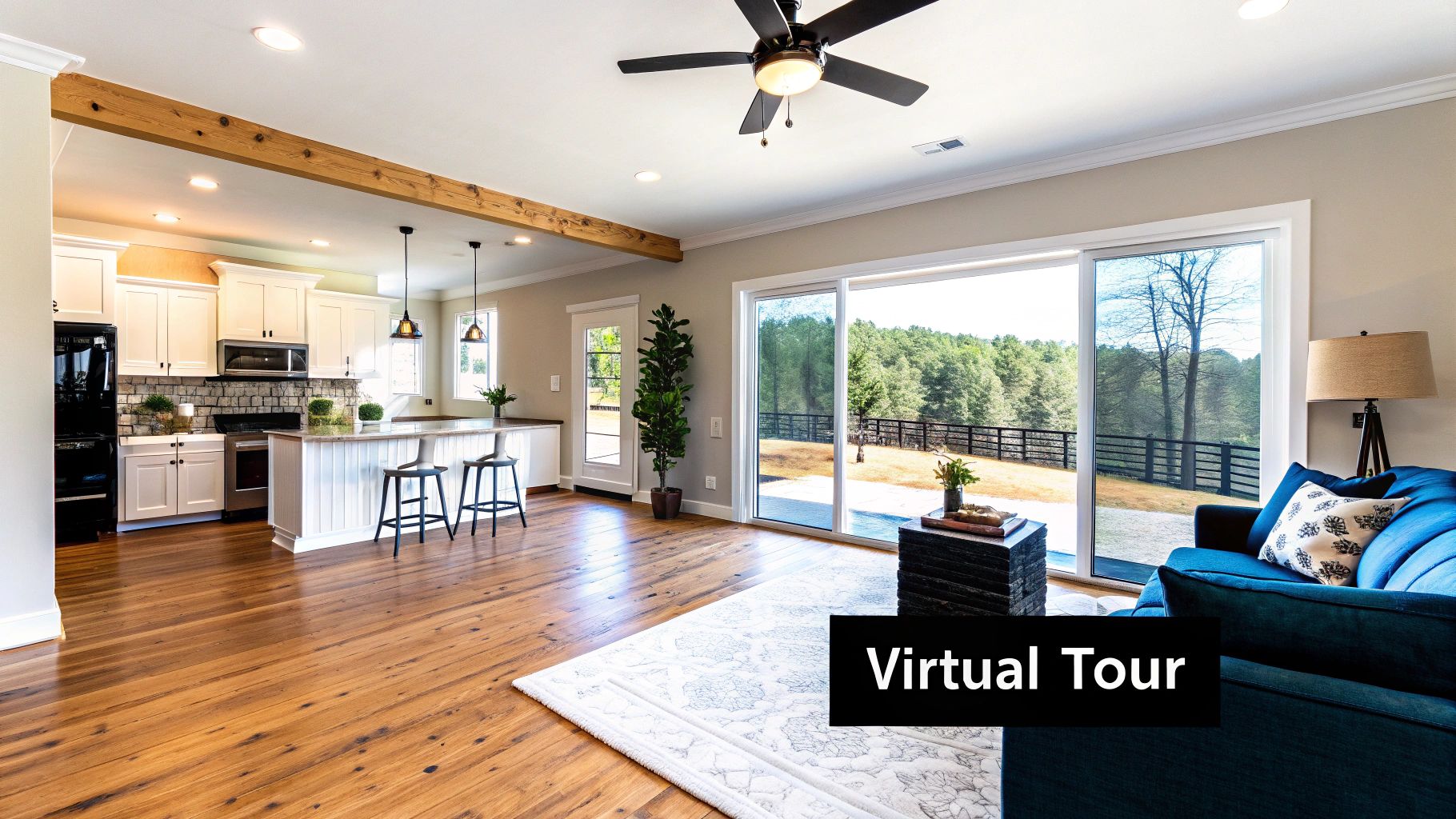
This method moves beyond static photos, providing a true sense of a home's layout, flow, and scale, which is crucial for building emotional connection and buyer confidence.
Strategic Breakdown
- Target Audience: Ideal for out-of-town buyers, busy professionals, and initial-stage prospects who are browsing multiple properties. It also appeals to tech-savvy millennials and Gen Z buyers who expect digital-first experiences.
- Why It Works: Virtual tours significantly increase engagement time on a listing. They build transparency and trust, reduce wasted time on in-person showings for unqualified leads, and make a listing stand out in a crowded market. Platforms like Zillow’s 3D Home and Matterport have made this technology highly accessible.
- KPIs to Track: Key metrics include Tour Views, Average Engagement Time within the tour, and the Click-Through Rate (CTR) on calls-to-action embedded within the experience.
Implementation Tips
To maximize lead generation from your virtual tours:
- Embed in Ads: Directly embed a preview of the tour in Facebook Lead Ads or Carousel Ads to capture attention and information seamlessly.
- Automate Lead Capture: Use a tool like LeadSavvy Pro to automatically capture viewer information as they engage with the tour.
- Trigger Follow-ups: Set up automated email or SMS sequences that trigger based on tour engagement, such as when a user spends over two minutes viewing a property.
- Include CTAs: Place clear calls-to-action like “Schedule a Showing” or “Request More Info” directly within the tour interface.
2. Before-and-After Renovation Stories
Before-and-after renovation stories are powerful real estate advertising examples that tap into the psychology of transformation and value creation. This strategy uses compelling visual narratives, often in video or image carousels, to showcase a property's journey from outdated to stunning. This HGTV-style content captures attention by demonstrating a home's hidden potential and tangible equity growth.
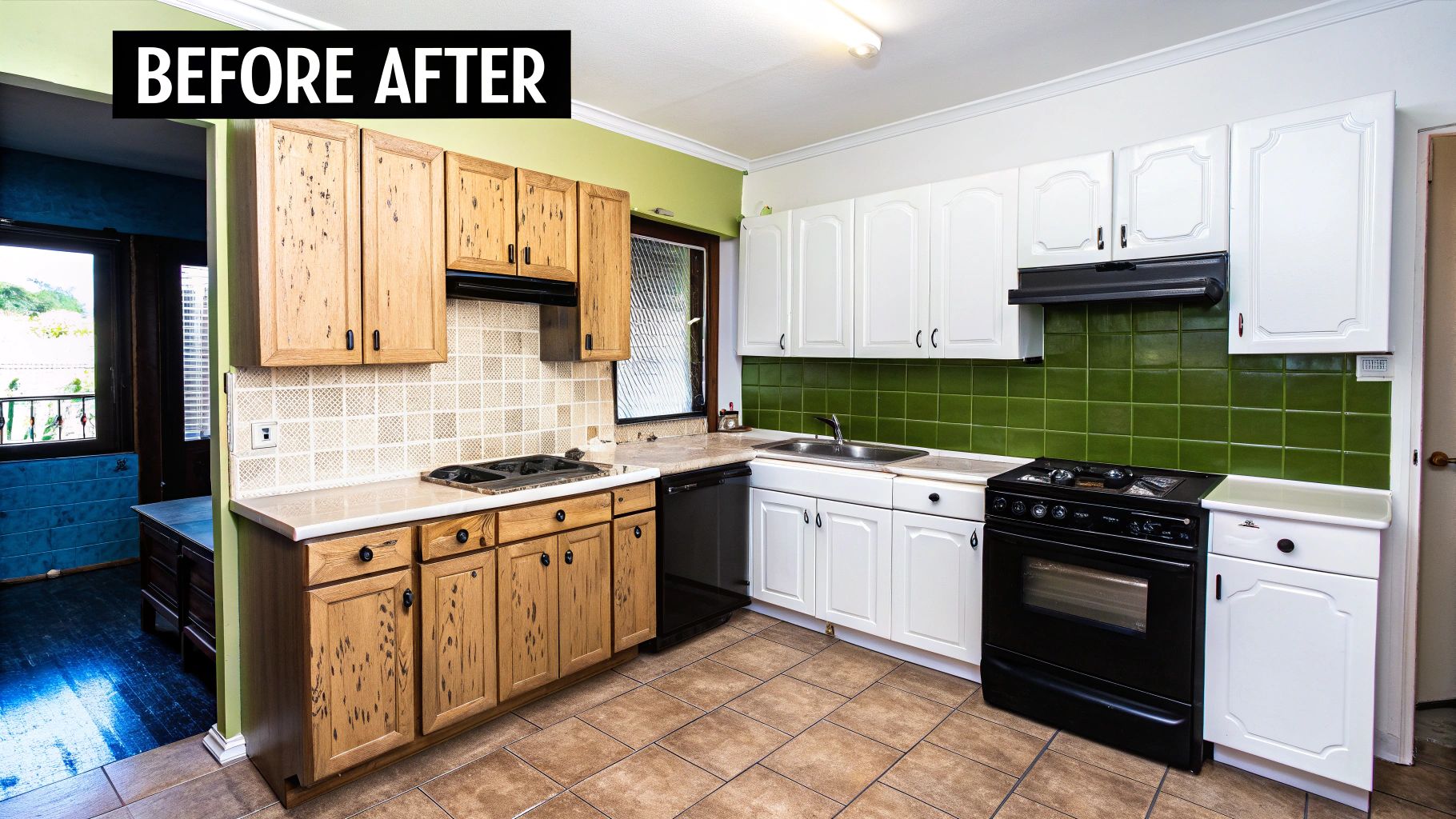
By telling a story of improvement, you engage buyers on an emotional level, helping them envision themselves adding their own touch and building a future in the space.
Strategic Breakdown
- Target Audience: Perfect for first-time homebuyers looking for sweat equity, investors seeking fixer-uppers, and buyers who appreciate modern design and added value. It also attracts aspirational followers on social media platforms like Instagram and Pinterest.
- Why It Works: This method creates a highly shareable asset that highlights an agent's or firm's ability to see and unlock potential. It builds credibility, justifies a higher asking price post-renovation, and generates leads from buyers specifically interested in updated or customizable properties.
- KPIs to Track: Monitor Share Rate and Comments on social media, Video Completion Rate for transformation videos, and Lead Form Submission Rate on ads targeting fixer-upper interest.
Implementation Tips
To turn renovation stories into a lead-generating machine:
- Create Carousel Ads: Use a 5-7 image carousel on Facebook or Instagram to walk users through the transformation, with the final slide being a call-to-action.
- Qualify Leads: Include a question on your lead form like, "Are you interested in properties with renovation potential?" to segment your audience.
- Route Inquiries Instantly: Use a tool like LeadSavvy Pro to sync renovation project inquiries from your ads directly to your CRM for immediate follow-up.
- Add Social Proof: Overlay testimonial quotes from the sellers or contractors directly onto the "after" images to add a layer of trust and credibility.
3. Agent Video Introductions and Personal Branding
Agent video introductions are a powerful form of real estate advertising that humanizes the sales process by building personal brand authority. This strategy involves creating short-form video content where agents introduce themselves, share market insights, or offer valuable tips, fostering a direct and authentic connection with potential clients before they even meet. These videos move beyond property features to sell the agent’s expertise and personality.
By showcasing an agent's approachability and knowledge, this method builds trust and differentiates them in a competitive market, making prospects more likely to reach out.
Strategic Breakdown
- Target Audience: Ideal for first-time homebuyers seeking guidance, sellers looking for a trustworthy local expert, and anyone who values a personal connection in business transactions. It resonates strongly on platforms like Instagram, TikTok, and Facebook.
- Why It Works: Video builds a parasocial relationship, making viewers feel like they know, like, and trust the agent. It establishes credibility and authority far more effectively than static text or photos. Authenticity in these videos can significantly shorten the sales cycle by pre-building rapport.
- KPIs to Track: Key metrics include Video Views, Audience Retention Rate (how long viewers watch), Engagement Rate (likes, comments, shares), and Lead Form Submissions from calls-to-action linked in the video.
Implementation Tips
To turn agent branding videos into a lead-generation machine:
- Use Native Lead Forms: When posting on social media, direct viewers to a native Facebook Lead Ad form for a seamless, low-friction experience.
- Track Agent Performance: Use a tool like LeadSavvy Pro to monitor which agent’s videos generate the most qualified leads, helping you optimize your content strategy.
- Create a Content Series: Develop a recurring video series, like "Tuesday Tips" or "Market Minute," to encourage repeat viewership and build a loyal following.
- Pin Contact Information: Always pin a comment or include clear contact details in the video description to make it easy for motivated viewers to connect.
4. Neighborhood Highlight Ads
Neighborhood highlight ads shift the focus from a single property to the lifestyle and community of an entire area. These campaigns showcase local amenities, school districts, parks, and the unique character of a neighborhood, attracting buyers who are looking for a specific environment, not just a house. This approach positions the agent as a local expert and builds a pipeline of leads interested in a particular region.
This strategy is one of the most effective real estate advertising examples for capturing top-of-funnel interest and establishing long-term authority in a target market.
Strategic Breakdown
- Target Audience: Perfect for attracting relocation buyers, young families prioritizing school districts, and individuals seeking a specific lifestyle (e.g., urban, suburban, waterfront). It also targets buyers in the early research phase.
- Why It Works: It sells a lifestyle, not just four walls. This builds a stronger emotional connection and positions the agent as a go-to resource for a specific area. By capturing interest at the neighborhood level, you create a valuable database of leads for future listings in that community.
- KPIs to Track: Monitor Lead Form Submissions (with a field for neighborhood preference), Cost Per Lead (CPL), and the Engagement Rate (likes, shares, comments) on the ad creative.
Implementation Tips
To turn neighborhood interest into qualified leads:
- Create Segmented Ads: Develop unique ad sets for different neighborhoods, highlighting their distinct features, and use carousel ads to showcase various amenities.
- Use Lead Forms: Include a lead form directly in your Facebook ad that asks prospects about their preferred neighborhoods and price points.
- Route and Segment Leads: Use a tool like LeadSavvy Pro to automatically segment incoming leads based on their stated neighborhood interest for targeted follow-ups.
- Co-Market with Locals: Partner with popular local businesses (cafes, boutiques) for co-branded ads that enhance the community feel and expand your reach.
5. Open House and Event Promotion Ads
Event-based advertising is a powerful way to generate high-intent leads by creating a sense of urgency and community. These real estate advertising examples go beyond individual listings to promote open houses, first-time homebuyer workshops, or virtual property showcases. By focusing on a specific date and time, these ads compel users to take immediate action, converting passive browsers into active participants.
This strategy builds brand authority and captures leads who are actively seeking information, making it a highly effective tool for filling the top of the sales funnel with qualified prospects.
Strategic Breakdown
- Target Audience: First-time homebuyers, local community members within a specific zip code, investors looking for seminars, and prospects who have previously engaged with your content.
- Why It Works: Events create a low-pressure environment for prospects to engage with an agent. They establish you as a knowledgeable local expert and build a valuable email list for future nurturing. The built-in urgency of a time-sensitive event drives higher conversion rates on lead forms compared to evergreen ads.
- KPIs to Track: Core metrics include Cost Per Registration, RSVP Rate (form submissions), Attendance Rate (actual attendees vs. RSVPs), and Leads Generated from the event.
Implementation Tips
To turn event promotions into a lead generation machine:
- Use Facebook Lead Forms: Create a seamless RSVP experience by using native Facebook Lead Forms that pre-fill user information, maximizing completion rates.
- Automate Confirmations: Use a tool like LeadSavvy Pro to send instant confirmation emails or SMS messages to registrants, complete with event details and a calendar link.
- Send Timely Reminders: Schedule automated reminder emails and texts to be sent 24 hours and 1 hour before the event to reduce no-shows.
- Create Urgency: Use ad copy that highlights "Limited Spots Available" or "RSVP by [Date]" to encourage immediate sign-ups.
6. Client Testimonial and Success Story Ads
Leveraging client testimonials and success stories is one of the most powerful real estate advertising examples for building trust and credibility. This strategy uses social proof, featuring authentic feedback from satisfied buyers and sellers in video or image ads. These narratives transform abstract promises into tangible results, showing prospects that you can deliver a positive, successful experience.
By showcasing real people and their genuine stories, these ads cut through market noise and resonate on an emotional level, making your services feel more relatable and trustworthy.
Strategic Breakdown
- Target Audience: This is highly effective for targeting prospects in the consideration stage, such as potential sellers researching agents or first-time homebuyers looking for a guide they can trust. It works well for both buyer and seller leads.
- Why It Works: Testimonials are a form of third-party validation that is more persuasive than direct advertising. They address common client pain points and anxieties by showing successful outcomes, building confidence and encouraging hesitant prospects to take the next step.
- KPIs to Track: Monitor Video View-Through Rate (VTR) for video testimonials, Click-Through Rate (CTR) on the ad's call-to-action, and the Conversion Rate on your lead form or landing page.
Implementation Tips
To maximize the impact of your testimonial ads:
- Feature Specifics: Encourage clients to mention specific results, such as "sold in 7 days" or "helped us win a bidding war."
- Use Video: Film short, authentic video testimonials that capture the client's emotion and personality for higher engagement.
- Target Lookalike Audiences: Create lookalike audiences on social media based on your past clients to find new prospects with similar profiles.
- Add a Compelling CTA: End your ad with a call-to-action like "Get Your Success Story" or "Achieve the Same Results" that links directly to a consultation form.
7. Luxury and High-End Property Showcase Ads
Luxury and high-end property showcase ads are a distinct category of real estate advertising examples, designed to attract an affluent clientele through an aura of exclusivity and prestige. These campaigns utilize cinematic videography, high-fashion photography, and sophisticated storytelling to present a lifestyle, not just a property. They move beyond standard listing details, focusing on unique architectural features, bespoke finishes, and the aspirational experience the home offers.

Brands like Sotheby's International Realty excel at this, creating a brand experience that communicates unparalleled quality and service, justifying a premium price point. The goal is to create desire and prompt inquiries from highly qualified, high-net-worth individuals.
Strategic Breakdown
- Target Audience: High-net-worth individuals, international investors, CEOs, and clients of private wealth managers. Targeting is often based on interests in luxury brands (e.g., Rolex, private jets), high-end travel, and financial publications.
- Why It Works: Exclusivity sells. By positioning a property as a rare masterpiece, these ads tap into the psychological drivers of the luxury market. The polished, high-production quality builds immense brand credibility and attracts serious buyers who expect a premium, white-glove service.
- KPIs to Track: Key metrics are not volume-based but quality-based. Track Lead Quality Score, Number of Private Showing Requests, and Conversion Rate from lead to showing.
Implementation Tips
To effectively capture and manage high-value leads from these campaigns:
- Use Gated Content: Require lead form submission to view an exclusive, cinematic video tour or a detailed digital brochure.
- Qualify with Forms: Add fields to your lead form to qualify prospects, such as "Purchase Timeline" or "Are you working with an agent?" to gauge seriousness.
- Flag VIP Leads: Use a tool like LeadSavvy Pro to create rules that instantly flag leads from high-income zip codes or those who meet specific criteria for immediate, high-priority follow-up.
- Offer Private Showings: Include a direct option in the ad or landing page for prospects to request a private, confidential viewing, reinforcing the exclusive nature of the listing.
8. Market Statistics and Real Estate Education Ads
Educational content is one of the most powerful real estate advertising examples for building authority and capturing top-of-funnel leads. Instead of directly selling a property, this strategy offers value through market statistics, neighborhood guides, home-buying tips, or mortgage education. This positions the agent as a trusted expert, attracting prospects who are in the early research phase.
By providing answers to common questions, agents can build relationships long before a prospect is ready to transact, ensuring they are the first person called when the time is right.
Strategic Breakdown
- Target Audience: First-time homebuyers, potential sellers evaluating the market, real estate investors, and individuals in the initial research stage. It is also effective for targeting specific neighborhoods or zip codes with hyperlocal data.
- Why It Works: This approach generates high-quality, long-term leads by establishing trust and credibility. It taps into user intent for information, not just property listings, which often has less competition. Gated content like guides or reports is an excellent mechanism for lead capture.
- KPIs to Track: Key metrics include Cost Per Lead (CPL) from gated content, Download/Conversion Rate on landing pages, and the Lead-to-Appointment Rate from the nurtured educational leads.
Implementation Tips
To turn your educational content into a lead generation machine:
- Gate Premium Content: Offer valuable resources like a "Complete Seller’s Guide" or "Local Market Report" in exchange for contact information using a simple landing page.
- Use Lead Capture Tools: Integrate a tool like LeadSavvy Pro with your Facebook Lead Ads or landing pages to instantly capture and route new leads.
- Create Nurture Sequences: Set up automated email campaigns that deliver more helpful content based on the topic the lead was interested in, keeping you top of mind.
- Include a Clear CTA: End every piece of educational content with a clear call-to-action, such as “Get a Custom Home Valuation” or “Schedule a Free Consultation.”
9. Seasonal and Holiday-Themed Real estate Ads
Seasonal and holiday-themed ads are powerful real estate advertising examples that tap into timely buying patterns and emotional triggers. These campaigns align marketing messages with specific times of the year, such as the spring buying frenzy, summer relocations, or year-end financial planning, creating a natural sense of urgency and relevance for potential clients. By connecting the home buying journey to relatable life events and seasonal aspirations, agents can make their advertising feel more personal and immediate.
This strategy moves beyond generic property listings, allowing you to craft ads that resonate with what’s currently on your audience’s mind, whether it’s finding a new home for the new year or securing a property before school starts.
Strategic Breakdown
- Target Audience: Families planning moves around the school calendar, first-time buyers motivated by New Year's resolutions, and investors looking for year-end tax benefits. It’s highly effective for targeting audiences with predictable life-stage triggers.
- Why It Works: These ads create a strong sense of urgency and relevance. A "Be in Your New Home by Summer" campaign feels more compelling in April than a generic "Search for Homes" ad. It leverages cultural moments and established consumer mindsets to boost engagement and drive timely action.
- KPIs to Track: Monitor Lead Volume during peak seasons, Cost Per Lead (CPL) to measure campaign efficiency, and Lead-to-Appointment Rate to gauge the quality of seasonally motivated prospects.
Implementation Tips
To get the most out of your seasonal campaigns:
- Create a Campaign Calendar: Plan your creative, copy, and offers at least six months in advance to align with key holidays and seasons.
- Use Seasonal Messaging: Tailor your lead form copy to the season, such as offering a “Spring Moving Checklist” or a guide to “Holiday Entertaining in Your New Home.”
- Automate Lead Tagging: Use a tool like LeadSavvy Pro to automatically tag leads based on the campaign (e.g., "Spring2024_Lead"), making it easier to track ROI and customize follow-up.
- Align Follow-Up: Develop automated nurture sequences that acknowledge the seasonal context, keeping your communication relevant long after the initial click.
10. Retargeting and Remarketing Ads
Retargeting ads are a highly efficient real estate advertising example, designed to re-engage prospects who have previously interacted with your brand but didn't convert. These campaigns target users who have visited your website, viewed a specific listing, or watched a video, serving them a relevant ad to bring them back into your sales funnel. This strategy keeps your properties top-of-mind and reminds interested parties to take the next step.
This method is crucial for maximizing your ad spend, as it focuses on a warm audience that has already demonstrated interest, leading to higher conversion rates compared to cold outreach.
Strategic Breakdown
- Target Audience: Website visitors who viewed specific property pages, users who engaged with your video tours on social media, and prospects who started but did not complete a lead form.
- Why It Works: Retargeting capitalizes on familiarity and prior interest. It addresses the reality that most buyers don't convert on their first visit. By showing them the exact property they viewed, you provide a gentle nudge that feels personalized and helpful, significantly boosting the likelihood of conversion. To further refine your campaigns and re-engage potential leads who have shown interest, explore effective retargeting advertising strategies.
- KPIs to Track: Key metrics include Cost Per Acquisition (CPA), Conversion Rate, Return on Ad Spend (ROAS), and Frequency (the number of times an individual sees your ad).
Implementation Tips
To run a successful retargeting campaign:
- Segment Your Audience: Create different audiences based on behavior, such as "Viewed Listing A," "Watched 50% of Video Tour," or "Abandoned Lead Form."
- Use Dynamic Ads: Serve ads that dynamically show the exact property a user was viewing to create a highly personalized experience.
- Set Frequency Caps: Limit ad impressions to 3-5 times per week to avoid ad fatigue and annoyance, which can harm your brand perception.
- Optimize Lead Capture: Ensure your retargeting ads lead to a simple, optimized landing page or lead form. Learn more about how to set up powerful Facebook retargeting campaigns to capture these high-intent leads.
11. User-Generated Content and Community Engagement Ads
User-generated content (UGC) and community engagement ads are powerful real estate advertising examples that leverage authenticity to build trust. Instead of polished corporate messaging, this strategy showcases genuine content from clients and community members, such as client home reveal videos, testimonials, or photos shared with a branded hashtag like #MyCityDreamHome. This grassroots approach fosters a sense of community, generates powerful social proof, and significantly reduces content production costs.
By featuring real people and their stories, these campaigns transform passive audiences into active brand advocates, creating a relatable and trustworthy image that resonates deeply with prospective clients.
Strategic Breakdown
- Target Audience: Perfect for targeting local, community-focused buyers and sellers, first-time homebuyers who value peer reviews, and younger demographics (Millennials/Gen Z) who are skeptical of traditional advertising.
- Why It Works: UGC is seen as more authentic and trustworthy than brand-created content, leading to higher engagement and conversion rates. It builds an emotional connection, creates a loyal community around your brand, and provides a continuous stream of fresh, low-cost marketing material.
- KPIs to Track: Key metrics include UGC Submissions, Engagement Rate (likes, comments, shares) on UGC-focused posts, Brand Mentions or Hashtag Usage, and the Conversion Rate on ads featuring user content.
Implementation Tips
To effectively leverage user-generated content for lead generation:
- Launch a Hashtag Campaign: Create a branded hashtag and run a contest or giveaway to incentivize clients and followers to share photos of their homes or favorite local spots.
- Feature Client Stories: Turn client testimonials and closing-day photos into compelling Facebook or Instagram Carousel Ads, telling a relatable story in each slide.
- Request Content Submissions: Use a simple lead form to ask community members to submit their favorite neighborhood photos or stories, building your content library and email list simultaneously.
- Automate Engagement Tracking: Use a social listening tool to monitor your branded hashtag and automatically engage with users who contribute, making them feel valued.
12. Interactive Quiz and Preference Assessment Ads
Interactive quizzes and assessments are powerful real estate advertising examples that turn passive browsing into an active, engaging experience. These gamified campaigns use tools like mortgage calculators, neighborhood compatibility finders, or "What's Your Home Style?" quizzes to capture user attention while gathering valuable preference data. This strategy pre-qualifies leads by understanding their needs before you even make contact.
This approach combines lead generation with market research, providing immediate value to the prospect with personalized results while you collect crucial data for targeted follow-ups. It’s a win-win that feels less like an ad and more like a helpful tool.
Strategic Breakdown
- Target Audience: Top-of-funnel prospects, first-time homebuyers unsure of their needs, and individuals in the early research phase who are hesitant to fill out a standard contact form.
- Why It Works: Quizzes offer a low-commitment way for users to engage. They generate high-quality leads by capturing specific data points (e.g., budget, desired bedrooms, neighborhood preferences) that enable highly personalized outreach, significantly boosting conversion rates.
- KPIs to Track: Key metrics are Quiz Completion Rate, Lead Form Submission Rate (within the quiz), Cost Per Qualified Lead, and analysis of the Response Data to identify market trends.
Implementation Tips
To turn interactive quizzes into a lead generation machine:
- Optimize Quiz Flow: Keep quizzes short, around 5-8 questions, to maximize completion rates. Place the lead capture form mid-quiz rather than at the end.
- Provide Instant Value: Deliver personalized results, like a list of matching neighborhoods or a budget estimate, immediately upon completion to reward the user.
- Automate Data Syncing: Use a tool like LeadSavvy Pro to automatically import quiz responses into your CRM's custom fields, enriching your contact profiles.
- Segmented Follow-up: Create automated email or SMS nurturing campaigns based on quiz answers. For example, send a list of 3-bedroom homes to a user who specified that preference. This is a core component of effective real estate agent lead generation.
12 Real Estate Ad Examples Comparison
| Ad Format | 🔄 Complexity | ⚡ Resource requirements | 📊 Expected impact (quality) | 💡 Ideal use cases | ⭐ Key advantages |
|---|---|---|---|---|---|
| Virtual Tours and 3D Walkthroughs | High — specialized capture & stitching | High — 3D cameras, drone, production pros | High 📊 — ⭐⭐⭐ (strong lead qualification, engagement) | Remote buyers, luxury listings, long-distance marketing | Immersive viewing; higher-quality leads |
| Before-and-After Renovation Stories | Medium — ongoing project access & editing | Medium — pro photography & timeline docs | Medium-High 📊 — ⭐⭐✶ (emotional engagement, shareable) | Flippers, renovation-focused buyers, social campaigns | Demonstrates value; strong virality potential |
| Agent Video Introductions & Personal Branding | Low — short-form production | Low — smartphone/ basic editing | Medium 📊 — ⭐⭐ (builds trust and recall) | Agent differentiation, local brand building | Humanizes agents; low production cost |
| Neighborhood Highlight Ads | Medium — research + local shoots | Medium — local assets & partnerships | Medium 📊 — ⭐⭐ (awareness, area interest) | Relocation marketing, community awareness campaigns | Evergreen content; builds community recognition |
| Open House & Event Promotion Ads | Low — event setup & RSVP flows | Low-Medium — event logistics & promo assets | Medium 📊 — ⭐⭐ (drives attendance and RSVPs) | Local open houses, seminars, time-sensitive events | Creates urgency; direct lead capture |
| Client Testimonial & Success Story Ads | Medium — coordination & approvals | Low-Medium — interviews & basic production | High 📊 — ⭐⭐⭐ (strong credibility, higher conversions) | Trust-building, objection handling, conversion lift | Powerful social proof; improves close rates |
| Luxury & High-End Property Showcase Ads | High — cinematic production & screening | Very High — luxury photography, bespoke targeting | High 📊 — ⭐⭐⭐ (targets HNW buyers; justifies price) | High-value listings, exclusive/private sales | Prestige positioning; attracts qualified buyers |
| Market Statistics & Real Estate Education Ads | Medium — data aggregation & updates | Low-Medium — research & content creation | Medium 📊 — ⭐⭐ (authority building; lead magnets) | Early-stage research buyers, nurturing funnels | Establishes expertise; cost-effective lead capture |
| Seasonal & Holiday-Themed Real Estate Ads | Low — thematic creative & scheduling | Low — seasonal assets & planning | Medium 📊 — ⭐⭐ (timely engagement, urgency) | Seasonal promotions, holiday campaigns | Leverages timing; highly relevant to prospects |
| Retargeting & Remarketing Ads | Medium — pixel setup & segmentation | Medium — ad tech, audience data | High 📊 — ⭐⭐⭐ (improves ROI and conversion) | Warm audiences, abandoned visitors, re-engagement | Efficient conversions; lowers cost-per-lead |
| User-Generated Content & Community Engagement Ads | Medium — moderation & curation | Low — community management & incentives | Medium 📊 — ⭐⭐ (authentic reach, referrals) | Local engagement, referral programs, organic growth | Authenticity; reduced production costs |
| Interactive Quiz & Preference Assessment Ads | High — platform logic & UX development | Medium-High — dev, UX, data integration | High 📊 — ⭐⭐⭐ (rich data; highly qualified leads) | Lead qualification, personalized recommendations | Collects detailed preferences; high engagement |
From Inspiration to Implementation: Building Your Winning Ad Strategy
We've explored a dozen powerful real estate advertising examples, from immersive virtual tours to hyper-targeted retargeting campaigns. The journey through these strategies reveals a fundamental truth: modern real estate marketing is no longer about simply listing properties. It's about building connections, providing value, and creating a seamless experience from the first click to the final closing.
The examples showcased are not just isolated tactics; they are components of a larger, more sophisticated marketing engine. An agent's personal branding video builds the trust necessary for a client to engage with a neighborhood highlight ad later on. A market statistics ad educates a first-time buyer, priming them for an open house promotion that feels timely and relevant. This interconnectedness is the cornerstone of a successful, multi-channel strategy.
Synthesizing Your Strategic Blueprint
The key takeaway is not to copy these ads verbatim. Instead, the goal is to deconstruct their underlying principles and apply them to your unique market, brand, and client avatar. The true power lies in understanding why they work.
- Emotional Connection: Ads featuring before-and-after stories or authentic client testimonials tap into the deeply personal journey of buying or selling a home. They create an emotional resonance that a simple property listing cannot achieve.
- Demonstrated Expertise: Educational content, such as market statistics or neighborhood guides, positions you as a trusted advisor, not just a salesperson. This approach attracts clients who value expertise and are looking for a guide through a complex process.
- Targeted Value: Luxury property showcases and interactive quizzes demonstrate a deep understanding of specific audience segments. They deliver tailored content that speaks directly to a niche buyer's or seller's desires and pain points, resulting in higher-quality leads.
- Technological Leverage: Virtual tours and sophisticated retargeting ads meet modern consumer expectations. They provide convenience, personalization, and a high-tech experience that signals professionalism and efficiency.
The most successful agents and agencies blend these elements, creating a diverse advertising portfolio that nurtures leads at every stage of the funnel. They don't just run ads; they build comprehensive campaigns that tell a consistent and compelling story across every touchpoint.
The Critical Last Mile: From Lead Capture to Conversion
However, even the most creative and strategically sound advertising campaign will falter if the follow-up process is broken. Generating interest is only half the battle. The moment a potential client submits their information on a Facebook Lead Ad or an interactive quiz is the most critical juncture in the entire sales cycle.
Strategic Insight: Speed-to-lead is a non-negotiable factor in real estate conversion. Research consistently shows that responding to an online lead within the first five minutes can increase contact rates by over 100%.
This is where many well-funded advertising efforts fail. Relying on manual processes like downloading CSV files from your ad platform introduces delays that kill momentum and cost you clients. A lead that waits hours, or even a full day, for a response has likely already moved on or been contacted by a competitor.
The crucial final step in operationalizing the real estate advertising examples we've discussed is implementing an automated system to bridge the gap between ad platforms and your CRM. This ensures every lead is captured, routed to the correct agent, and engaged with instantly. Automating this "last mile" of your marketing transforms your ad spend from a speculative expense into a predictable, revenue-generating investment. It allows you to capitalize on the intent you worked so hard to create, maximizing the ROI of every single campaign and giving you an undeniable competitive edge.
Ready to ensure every lead from your powerful new ads gets the immediate attention it deserves? LeadSavvy Pro instantly syncs leads from your Facebook ads directly to your CRM and notifies your team in real-time. Stop losing clients to slow follow-up and start converting more deals by visiting LeadSavvy Pro to automate your lead management today.