Your Guide to Free Lead Generation That Actually Works
It's a common myth that you need a huge budget for paid ads to get high-quality leads. I've seen it time and again—business owners feel stuck, believing they have to spend big to grow.
The truth? You can build a powerful, sustainable pipeline of leads without spending a single dollar on ads. The whole game changes when you shift your mindset from buying attention to earning it.
Move Beyond Paid Ads to Earn Your Leads

Let’s be clear: paid ads have their place. They're fast. But free lead generation builds something far more valuable in the long run—real, trust-based relationships with your audience. Instead of interrupting people with ads, you’re attracting them by offering genuine help.
This approach is all about creating a magnetic brand that pulls people in naturally. You're building assets that work for you 24/7, like a helpful blog post that ranks on Google or an active, supportive social media community. The work you put in today keeps paying off for months, and sometimes years.
The Power of Value-First Marketing
The strategy is actually pretty simple: give before you ask.
When you offer real value upfront, you establish yourself as a credible, go-to resource. People start to trust you. This could look like a few different things:
- Educational Content: Blog posts, guides, or short videos that solve a specific problem for your ideal customer.
- Community Engagement: Showing up and being genuinely helpful in Facebook groups or forums where your audience spends their time.
- Strategic Partnerships: Teaming up with businesses that serve the same audience but don't compete with you.
- Irresistible Offers: Creating free tools, checklists, or webinars that people gladly exchange their contact info for.
This isn't just about saving cash; it's about building a more resilient business. Think about it: content marketing, a huge part of this strategy, generates 3x more leads than old-school outbound methods and costs 62% less. That’s a massive win, whether you're a lean startup or a well-established company. You can dig into more lead generation statistics and see how they can shape your own strategy.
The best lead generation never feels like a sales pitch. It feels like the start of a helpful conversation, positioning your brand as a trusted advisor, not just another vendor trying to sell something.
Before we dive into the specific tactics, it's helpful to see how these two approaches stack up.
Free vs. Paid Lead Generation: A Quick Comparison
Here's a quick look at how free, inbound methods differ from the paid, outbound tactics you might be more familiar with.
| Attribute | Free Lead Generation (Inbound) | Paid Lead Generation (Outbound) |
|---|---|---|
| Cost | Low to zero monetary cost; requires time and effort. | High monetary cost; pay-per-click, -impression, or -lead. |
| Time to Results | Slower initial ramp-up, but builds long-term momentum. | Immediate results, but stops when you stop paying. |
| Lead Quality | Often higher quality and more qualified; they seek you out. | Can be mixed; leads may not be actively problem-solving. |
| Trust Factor | Builds strong, authentic trust and brand authority over time. | Trust is often lower; seen as a direct advertisement. |
| Sustainability | Creates lasting assets (content, SEO) that work 24/7. | Dependent on continuous ad spend. |
While paid ads give you a quick burst of visibility, free methods build a foundation for sustainable, long-term growth.
How Free Channels Build Lasting Connections
Each free channel gives you a different way to connect with people. Organic social media helps you build a loyal community around your brand. SEO-driven content puts you in front of people who are actively searching for what you offer. Partnerships let you borrow trust from other established brands. And a good referral program turns your happiest customers into your best salespeople.
Throughout this guide, we're going to break down the actionable tactics for each of these channels. I'll also show you how to use simple automation tools to make your free lead generation not just possible, but scalable and efficient. This is your new playbook for cost-effective growth.
Turn Social Media Into a Lead Generation Engine
Posting on social media can sometimes feel like shouting into the void. You pour effort into creating content, hit publish, and… crickets. What if you could flip that script and turn those platforms into a consistent source for free leads? It's not only possible, but it’s also simpler than you think once you shift from broadcasting your message to actually building a community.
When you focus on delivering genuine value, people naturally start paying attention. This isn't about chasing viral trends or having the slickest graphics. It’s about becoming the go-to resource for your ideal customer. The best part? The leads you get this way are often way more qualified because they already know, like, and trust you.
The data doesn't lie. A massive 66% of marketers are successfully pulling in leads from social media, and many are doing it by dedicating just six hours a week. It proves that a smart, focused strategy can deliver incredible results without you having to live on these platforms 24/7.
Winning on Facebook Without Spending a Dime
Think Facebook is dead for organic reach? Think again. The secret is knowing where to focus your energy. Instead of just posting on your business page (where organic reach can be painfully low), you need to be hanging out in Facebook Groups.
Find the groups where your target audience is already active and just start participating. The golden rule here is to be helpful, not salesy.
- Answer questions thoughtfully. When someone asks for advice in your area of expertise, jump in with a detailed, valuable answer. Don't pitch—just help.
- Share your knowledge freely. Post quick tips, interesting insights, or small wins that solve a common problem for the group members. This is how you build authority.
- Engage with other people's posts. A simple, thoughtful comment can spark a conversation and build genuine rapport.
Do this consistently, and people will start to recognize you as a helpful expert. They'll get curious, check out your profile, click over to your website, and eventually, reach out. It’s a long game, but it builds a rock-solid reputation that pays off.
Another fantastic tool in your arsenal is Facebook Live. Hosting a quick Q&A session or a mini-workshop creates a direct, real-time connection with your audience. You can answer their questions on the spot, show off what you know, and build a personal connection that a static post just can't match. Always wrap up your live sessions with a clear call-to-action, like inviting people to download a freebie or join your email list.
Converting Instagram Followers Into Prospects
Instagram is all about visuals and personality, which makes it perfect for telling your brand's story. But turning those likes and follows into actual leads requires a bit of strategy.
Your "link in bio" is the most valuable piece of real estate you have on the platform. Don't just waste it by linking to your homepage. Use a simple tool like Linktree or Carrd to create a mini-landing page that holds several key links, like your latest blog post, a newsletter sign-up, or a free guide. This makes it incredibly easy for followers to take the next step.
Interactive Instagram Stories are an absolute goldmine for lead generation. Use features like polls, quizzes, and the question sticker to start conversations. Every time someone engages, they're giving you an open invitation to slide into their DMs with a personalized message.
Let's say a business coach runs a poll asking, "What's your biggest challenge with time management?" For everyone who votes, the coach can send a quick DM that says something like, "Hey, thanks for voting in my poll! I actually have a free checklist that helps with that exact problem. Want me to send it over?"
This approach is personal, helpful, and crazy effective. It transforms passive followers into active leads by offering immediate value based on an interest they just told you they have. We dive into more advanced tactics in our guide on social media lead generation strategies.
Beyond Facebook and Instagram
While Facebook and Instagram are undeniably powerful, don't forget about other platforms where your audience might be spending their time. For B2B businesses, LinkedIn can be a game-changer. Engaging in professional discussions and sharing deep industry insights there can attract some seriously high-quality leads. For more ideas on that front, check out these top LinkedIn lead generation strategies.
No matter the channel, the core principle is always the same: provide value first, build a genuine community, and make it ridiculously easy for interested people to raise their hand and say they want to learn more.
Don't Let Your Facebook Leads Go Cold
You've done the hard work. Your Facebook Lead Form is live, and fresh leads are finally coming in. But what happens next?
If your process involves manually downloading a CSV file from Facebook every few hours, you're already behind. Speed is everything when it comes to leads. A delay of just a few minutes can be the difference between a hot prospect and a missed opportunity. That manual grind isn't just a time-sink; it’s a conversion killer.
The good news? There’s a much smarter way to handle this.
Why Manual Downloads Are Costing You Sales
Relying on manual downloads from Facebook’s Ads Manager creates problems that quietly sabotage your lead gen efforts.
- Delayed Follow-Up: Let's be honest, the longer a lead waits, the colder they get. By the time you finally download the file, import it, and get it to the right person, they’ve likely forgotten they even filled out your form. Or worse, they've moved on to a competitor.
- Wasted Time: Your time is valuable. It should be spent talking to potential customers, not wrestling with spreadsheets. Manual data entry is tedious, error-prone, and a massive productivity drain.
- Lost Leads: Without a central, automated system, leads can easily get lost in the shuffle, duplicated, or mismanaged. This leads to a messy pipeline and a frustrating experience for everyone involved.
You need a seamless flow that takes a person from curious visitor to converted lead without any friction.
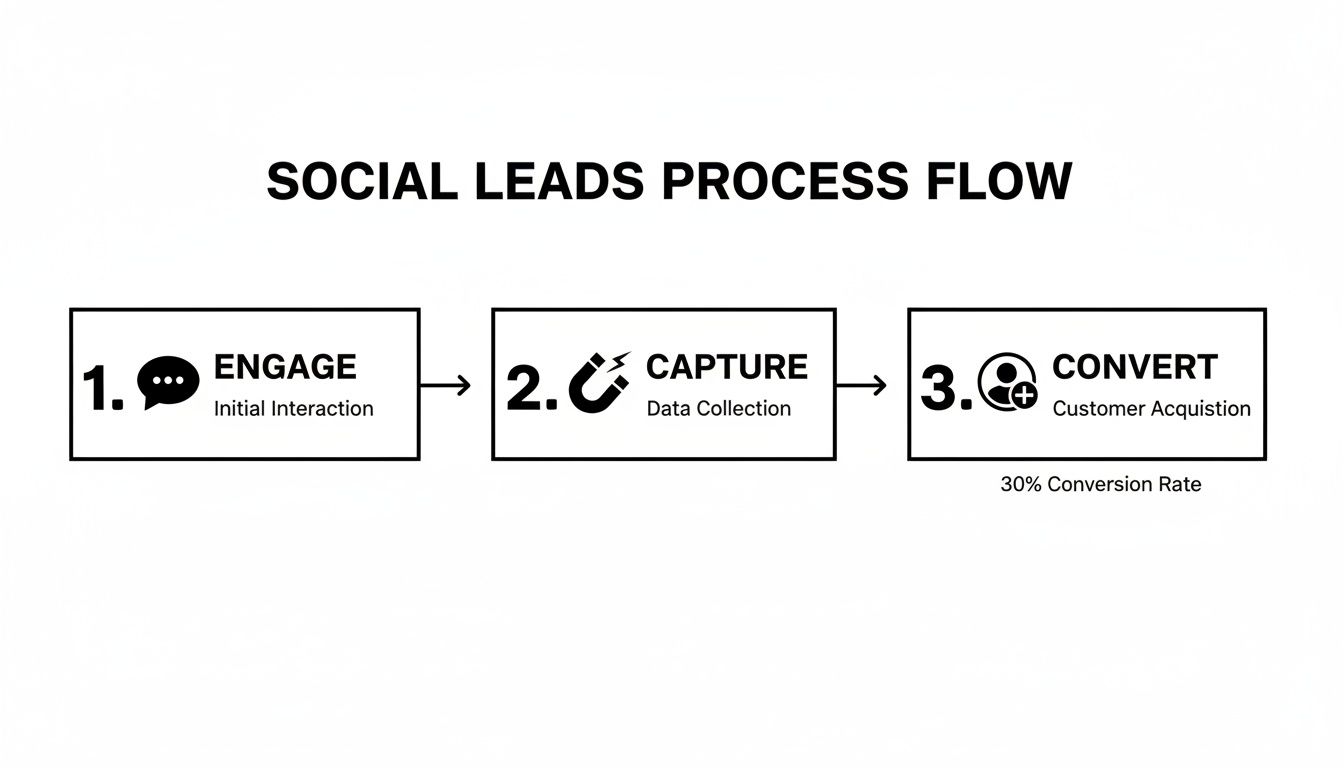
The goal is to move prospects from engagement to capture to conversion automatically. That's how you scale.
Bridge the Gap and Automate Your Workflow
The solution is to build an automated bridge between your Facebook Lead Form and the tools your team already uses, whether that's a CRM, an email marketing platform, or even just a Google Sheet. This is where a tool like LeadSavvy Pro comes in. It acts as the middleman, instantly grabbing lead data from Facebook the second it comes in and pushing it exactly where it needs to go.
Here’s a quick walkthrough of how simple this is to set up. Seriously, it takes less than five minutes and you don't need to be a tech wizard.
Step 1: Connect Your Facebook Account
First things first, you’ll connect your Facebook account to the automation tool. This is a secure authorization that simply gives the platform permission to see the lead data from the pages you manage. Just log in with your Facebook credentials and grant the necessary permissions when prompted. Easy.
Step 2: Pick Your Page and Form
Once you're connected, you'll see a list of all the Facebook Pages you're an admin for. Just select the page that’s running your lead ad campaign. Then, you'll pick the specific Lead Form you want to pull leads from. This ensures you’re only syncing data from the right campaign.
Step 3: Choose Where Your Leads Go
This is where the magic happens. You decide where the lead information gets sent the moment it’s captured. Some of the most popular options include:
- Google Sheets: Perfect for creating a simple, shared database of all your new leads.
- Your CRM: Push leads directly into your sales pipeline in tools like HubSpot or Salesforce.
- Email Notifications: Get an instant alert sent straight to your inbox or your sales team's distribution list.
Pro Tip: I always recommend setting up at least two destinations: a Google Sheet and an email notification. The sheet serves as a master log and a reliable backup of every lead, while the instant email ensures your sales team can jump on new opportunities immediately.
Why This Simple Automation is a Game-Changer
Setting up this connection completely transforms your lead management. Every new lead from your Facebook form will now instantly appear in your chosen destination—in real-time. No more downloads. No more CSVs. No more delays.
This empowers your team to follow up within minutes, making contact while the lead is still thinking about your offer and is most likely to engage. You'll be amazed at the difference in response rates.
To get started, we've put together a detailed guide on how to automate Facebook leads that dives even deeper into the setup.
And while this handles the capture side of things, remember that a strong lead gen machine also needs consistent content. For a fantastic look at streamlining your content delivery, check out this expert guide on how to automate social media posts. By automating both your content and your lead capture, you create an unstoppable engine for growth.
Use Your Content to Turn Website Visitors Into Leads
Let's be honest. Your website traffic is a potential goldmine, but just getting visitors isn't the goal. A simple "contact us" form is passive—it puts all the work on your potential customer. To really nail free lead generation, you have to stop waiting and start offering them something they can't resist.
This is where content upgrades change the game. Instead of hoping a visitor decides to reach out, you give them a powerful reason to hand over their email address. This one strategy turns your website from a static online brochure into a lead-capturing machine that works for you 24/7.
Find Out What’s Already Working
Before you create anything new, you need to know what your audience already loves. Pop open your website analytics—even a free tool like Google Analytics is perfect for this—and look for your most popular blog posts and pages from the last six to twelve months.
These high-traffic pages are your proven winners. People are already finding and reading this content, which means they're highly interested in that specific topic. When you align your freebie with the content they're already consuming, your conversion rates will soar.
Think about it: a blog post on "10 Time-Saving Tips for Small Business Owners" is the perfect spot to offer a downloadable "Weekly Productivity Planner." The connection is obvious, relevant, and instantly useful.
Create Content Upgrades People Actually Want
A content upgrade is simply a piece of bonus content you offer in exchange for an email. The secret is to make it so valuable that your visitor feels like they're getting an incredible deal for free. It doesn't have to be a 50-page ebook; in fact, some of the best-performing upgrades are simple, actionable resources.
Here are a few ideas that work wonders:
- Checklists: A simple, one-page checklist that helps readers execute the advice from your blog post.
- Templates: Offer a ready-to-use template, like a budget spreadsheet, an email script, or a social media content calendar.
- Short Guides: Bundle a few related blog posts into a nicely designed PDF that goes a little deeper on a single topic.
- Resource Libraries: Give people access to a locked page on your site with a curated list of your favorite tools, links, and resources.
Your goal is to solve a specific, immediate problem. If your blog post explains the what and the why, the content upgrade should deliver the how.
Write for Search Intent to Get the Right People
Even the world's greatest content upgrade won't do you any good if the wrong audience is seeing it. This is why basic on-page SEO is a crucial part of your free lead generation plan. You have to write for search intent—the real reason a person typed a query into Google.
Are they just looking for information ("what is a content upgrade")? Or are they looking for a solution ("best productivity planner template")?
When you understand the intent, you can tailor your content to meet their exact needs. I recommend focusing on long-tail keywords, which are longer and much more specific search phrases. A post targeting "how to create a social media calendar for real estate agents" will attract a far more qualified lead than a generic post about "social media."
When your content directly answers a visitor's specific question, they immediately see you as a credible authority. This builds trust and makes them far more likely to download your content upgrade and become a lead.
Ultimately, on-page SEO and content upgrades are a one-two punch. Great SEO brings qualified, motivated traffic to your site. A compelling, relevant content upgrade then captures their info, turning a casual visitor into a valuable lead. Once you have their email, you'll need a place to send them—you can learn more by reading our guide on how to create a high-converting landing page.
Master the Follow-Up to Nurture Your New Leads
Getting a new lead is a great feeling, but let's be real—it's only the beginning. The real magic, and the actual revenue, comes from what you do next. Capturing an email isn't a win; it's just getting permission to start a conversation.
Think about it from the lead's perspective. The second they hit "submit" on your form, their interest is at an all-time high. They're actively thinking about the problem you solve. If you wait a few hours (or worse, a few days) to get in touch, that spark is gone. Life happens. They get distracted, lose interest, or find a competitor who was quicker on the draw.
This is where automation becomes your secret weapon for any free lead generation strategy. It’s not just about convenience; it’s about survival.
Speed Is Everything
How fast you respond directly impacts whether you turn a prospect into a customer. It's not an exaggeration. Contacting a new lead within the first five minutes can skyrocket your chances of converting them. Even a 30-minute delay can cause your odds to plummet.
This is exactly why setting up automated systems, like the Facebook Lead Ad connection we walked through, is a non-negotiable. An instant welcome email guarantees that every single lead gets an immediate touchpoint. It confirms their submission, delivers whatever you promised, and makes a killer first impression. You look professional, organized, and ready to help.
Your first follow-up isn't about making a hard sale. It’s about acknowledging the lead, delivering immediate value, and opening the door for a real conversation. The goal is to be helpful, not hungry.
Crafting the Perfect Welcome Email
That first automated email sets the tone for the entire relationship. It needs to be warm, personal, and valuable right out of the gate. Ditch the corporate jargon and stiff, formal language. Just write like you're talking to a real person.
A great welcome email always includes these key ingredients:
- A Clear Subject Line: Keep it simple. "Here's the [Resource Name] you requested!" or "Welcome! Your next steps are inside" works perfectly.
- Immediate Value: If they signed up for a guide or checklist, give them the download link right at the top. Don't make them dig for it.
- A Personal Touch: Use their first name and give them a quick reminder of why you're in their inbox. ("Thanks for grabbing our productivity planner!").
- A Simple Next Step: End with a low-pressure question to encourage a reply. Something like, "Just hit reply and let me know if you have any questions as you look this over," is perfect for turning a monologue into a dialogue.
Beyond the First Email: The Power of Nurturing
One email is good. A simple, automated sequence of emails? That's even better.
This is the heart of lead nurturing—the process of building a relationship over time by providing consistent, relevant information. You stay top-of-mind by being genuinely helpful, so when they’re finally ready to pull the trigger and buy, you’re the only logical choice.
And this isn't just some feel-good marketing theory; it has a massive impact on your bottom line.
Research shows that companies that excel at lead nurturing generate 50% more sales-ready leads at a 33% lower cost. Even better, nurtured prospects are 47% more likely to make a larger purchase. You can dig into the full research on these lead nurturing stats to see just how powerful this is.
A simple nurture sequence could be just three to five emails sent over a couple of weeks. Each email could offer a new tip, share a related article, or answer a common question about the resource they downloaded.
By setting this up in a tool like LeadSavvy Pro, you ensure every new lead gets a consistent, high-value experience that builds trust and moves them closer to becoming a customer—all on autopilot.
Track Your Results to Optimize Your Strategy
Launching a free lead generation campaign is a great start, but the real magic happens when you start listening to what the data is telling you. Flying blind is the fastest way to waste your time and effort. You absolutely need to know what’s working and what isn’t so you can make smarter moves.
This isn’t about getting lost in a sea of spreadsheets or complicated analytics. It’s about zeroing in on a few key metrics that paint a clear picture of your campaign's health. By tracking the right numbers, you can turn your strategy from guesswork into a predictable growth engine.
Key Metrics to Monitor
To keep from getting overwhelmed, just focus on a handful of simple but powerful data points. These will give you the most insight without all the noise.
- Lead Volume by Channel: How many leads are coming from your content upgrades versus your organic social media posts? This tells you exactly where to double down on your energy.
- Conversion Rate: What percentage of people who see your content upgrade actually download it? A low number might signal that your offer isn't hitting the mark or your call-to-action needs a quick rewrite.
- Lead Quality: Are the leads you're generating actually a good fit for what you sell? Tracking how many leads turn into real conversations or paying customers is the ultimate report card for your efforts.
The goal isn't just to get more leads; it's to get better leads. Keeping an eye on your numbers lets you constantly refine your approach, making sure you're attracting people who are genuinely interested in your offer.
Free Tools for Smart Tracking
You don't need to shell out for expensive software to get started. A couple of free, powerhouse tools can give you everything you need to make informed decisions.
For instance, you can use Google Analytics to see how many people are visiting the blog posts that feature your content upgrades. You can even set up simple goals to track downloads, which instantly gives you a clear conversion rate.
And don't forget the built-in insights on platforms like Facebook and Instagram. They're goldmines of information, showing you which posts are getting the most engagement and clicks. This helps you figure out what kind of content actually gets your audience to take action. The key is to check these numbers regularly, spot the trends, and make small, continuous improvements.
Common Questions About Free Lead Generation
It's natural to have a few questions when you're jumping into the world of free lead generation. Let's clear up some of the most common ones we hear from marketers and business owners.
How Much Time Does This Really Take?
That's the million-dollar question, isn't it? The honest answer: it depends.
Unlike paid ads that can feel like turning on a traffic faucet (a faucet you have to keep paying for), free methods are all about building long-term assets. An SEO-optimized blog post might take you a few hours to write, and then it could be months before it starts climbing the Google rankings.
But once it hits page one? It can bring in qualified leads for years with very little extra work. Or think about engaging in a Facebook group—maybe 20-30 minutes a day. That consistent, small effort builds a reputation that pulls leads toward you naturally.
It's a classic tradeoff: you're investing time now to save money and get more sustainable results down the road.
Which Free Method Is the Most Effective?
The "best" method is simply the one that meets your ideal customers where they already hang out.
If you're a B2B software company, your people are probably on LinkedIn, so creating in-depth content upgrades and engaging in professional discussions there will crush anything you do on Instagram Stories. On the flip side, a brand selling beautiful handcrafted jewelry will find its tribe on visual platforms like Instagram and Pinterest.
The most effective strategy isn't about doing everything at once. It’s about picking one or two channels that perfectly match your audience and going all-in on mastering them first. Don't spread yourself thin.
Start by figuring out your audience. Where do they go to ask for advice? What kind of content do they binge-watch or read? The answer will point you straight to your most powerful lead generation channel. You don't need to be everywhere; you just need to be where it counts.
Ready to stop wasting time on manual downloads and follow up with your Facebook leads instantly? LeadSavvy Pro automates the entire process, sending leads directly to your CRM or Google Sheet in real-time. Start for free and see the difference at https://leadsavvy.pro.