Boost Results with business to business marketing automation
Think of business to business marketing automation as your company's master coordinator—a system working 24/7 to manage complex client relationships so your team doesn't have to. Instead of manually juggling leads, sending follow-ups, and guessing who’s actually interested, this technology handles it all for you.
What Is Business to Business Marketing Automation?
At its heart, B2B marketing automation is about using smart software to run your marketing tasks more efficiently. Picture it as the central nervous system of your entire marketing strategy, connecting every single touchpoint—from a prospect visiting your website to them opening an email—into one unified journey. It’s specifically built to handle the long, complicated sales cycles that are so common in the B2B world.
This isn't just about saving time on repetitive tasks like sending individual emails or updating spreadsheets. It's about creating intelligent, automated workflows that nurture potential clients over weeks or even months. The real goal is to deliver the right message to the right person at exactly the right moment, gently guiding them from a casual browser into a sales-ready lead.
The Shift from Manual to Automated Marketing
Moving to automation isn't just a trend anymore; it's a fundamental change in how modern businesses operate. The global marketing automation market was valued at $6.65 billion in 2024 and is expected to skyrocket to $15.58 billion by 2030. That kind of explosive growth tells you one thing: businesses everywhere are betting on automation to win.
Without it, companies run into the same old frustrating problems:
- Delayed Follow-Ups: A hot lead from a Facebook ad can go stone-cold in minutes if you don't reach out immediately.
- Inconsistent Messaging: Different team members might send mixed signals, creating a confusing and disjointed experience for the potential client.
- Lost Opportunities: High-potential leads often slip through the cracks when there’s no system to track and score their engagement.
- No Clear ROI: It’s almost impossible to prove which marketing activities are actually bringing in revenue.
Marketing automation solves these issues by building a reliable system. It captures, nurtures, and qualifies leads on autopilot, making sure every single prospect gets timely and relevant communication.
Building a Foundation for Growth
Getting started doesn't mean you have to buy an expensive, all-in-one platform right away. In fact, many of the most successful automation strategies begin by solving just one critical bottleneck. A simple tool that just automates your Facebook lead capture, for instance, can be the perfect entry point. This first step is a key part of an effective B2B lead generation strategy.
By automating just one high-impact process, you free up your team to focus on what humans do best—strategy, creativity, and building genuine client relationships. To get a better handle on the bigger picture, it helps to read up on what marketing automation is and its full scope. This approach lets you see immediate value while you build a foundation for even bigger wins down the road.
The Four Pillars of B2B Automation
To really get what B2B marketing automation can do, you need to peek under the hood. It’s not just about buzzwords; these platforms are built on four core components that work together seamlessly. Think of them as the pillars holding up a powerful structure, each one critical for turning anonymous website visitors into paying customers.
Nailing these four pillars is the key to a winning automation strategy. They create a logical path, moving a potential customer from their very first click all the way to a handshake with your sales team.
This simple flow chart shows exactly how that works:
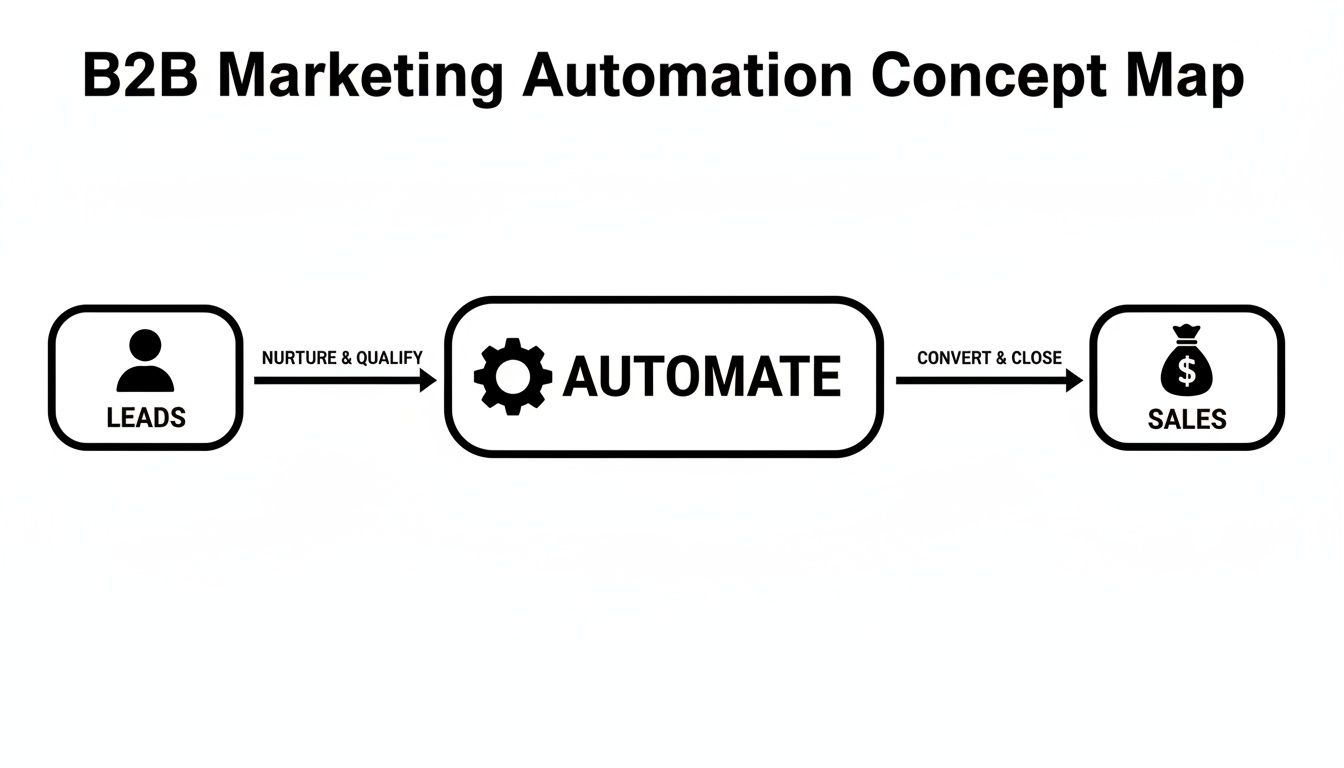
At its heart, automation is all about building a reliable and repeatable machine that turns raw leads into real, profitable sales opportunities.
Pillar 1: Lead Capture and Management
It all starts here. Lead capture is the front door to your entire system, pulling in contact information from every channel you can imagine. Forget manually exporting CSV files from social media ads or trying to transcribe names from a webinar sign-up sheet. That's slow, tedious, and a recipe for mistakes.
Automation makes this process instant.
- Website Forms: Instantly grab info from demo requests and ebook downloads.
- Social Media Ads: Automatically pull leads from platforms like Facebook Lead Ads.
- Third-Party Integrations: Connect directly with event software and other tools in your marketing stack.
Once a lead is captured, it’s organized into a central database. No more scattered spreadsheets. You get a single, unified view of every single prospect, which is the foundation for everything else you're about to do.
Pillar 2: Lead Scoring and Segmentation
Let's be honest: not all leads are created equal. A student downloading a whitepaper for a research project is worlds away from a CTO requesting a pricing quote. Lead scoring and segmentation act like a triage nurse in a busy ER, instantly identifying the hottest prospects who need immediate attention.
Lead scoring is the secret sauce. It’s a system that automatically assigns points to leads based on who they are (job title, company size) and what they do (visit your pricing page, open an email). It’s how you quantify a lead’s sales-readiness.
Once a lead hits a certain score, the system flags them as "sales-ready" and routes them to the right person. This data-driven approach means your sales team stops wasting time on tire-kickers and focuses only on the opportunities most likely to close. At the same time, segmentation groups similar leads together—by industry, interest, or behavior—so you can send them far more relevant messages.
Pillar 3: Nurturing and Engagement
A new B2B lead is almost never ready to buy on day one. The sales cycles are long and often involve a whole committee of decision-makers. This is where automated nurturing becomes your MVP. It’s your tireless relationship-builder, working 24/7 to keep your brand top-of-mind.
This pillar is all about delivering the right content at the right time. Based on a lead's score and segment, your automation platform can trigger personalized email sequences, send over relevant case studies, or invite them to a webinar they might actually find useful. This steady, helpful communication builds trust and educates your prospect, gently guiding them through their buying journey without anyone on your team lifting a finger.
Pillar 4: Analytics and Reporting
How do you know if any of this is actually working? The final pillar, analytics, is your command center. It gives you the clear, actionable data you need to measure what’s working, prove your ROI, and make smarter marketing decisions.
A solid B2B automation platform gives you detailed reports that answer the most important questions:
- Which marketing channels are bringing in the best leads?
- What content is most effective at moving people closer to a sale?
- How long is our average sales cycle, and where are the bottlenecks?
By connecting your marketing activities directly to sales outcomes, this pillar finally bridges the gap between the two teams. It provides the hard evidence you need to justify your marketing budget and continuously fine-tune your entire process for better and better results.
Right, so you get the what of B2B marketing automation. But let's talk about the why. Why does this matter for your business? How does it actually make you money?
This isn't just about sending a few emails on autopilot. It's a full-blown growth engine that solves some of the oldest, most nagging problems in B2B. We're talking about fixing the frustrating gap between marketing and sales and turning leaky funnels into well-oiled machines.
Let's dig into how it really moves the needle.
It Sharpens Lead Quality and Speeds Up Follow-Up
In B2B, time kills deals. Period. A lead's interest is red-hot for the first few minutes, but it goes cold fast. While you're busy downloading a CSV file, your competitor is already on the phone. Automation puts an end to that.
The second a lead fills out a form, the system gets to work. It can instantly qualify them, send a perfectly timed welcome email, and ping the right salesperson. No more high-potential leads sitting in a spreadsheet, getting stale.
Every single prospect gets a professional, immediate response. This alone can give you a massive leg up on the competition.
Automation erases the manual delays that kill deals. By ensuring every lead gets instant, personalized attention, you're not just improving their experience—you're sending much hotter, higher-quality leads to your sales team.
It Shortens the Painfully Long B2B Sales Cycle
Nobody makes a quick B2B purchase. It's a long game involving research, multiple decision-makers, and a whole lot of "let me think about it." Marketing automation is built for this marathon.
It helps you build out nurturing campaigns that drip valuable content to your prospects over weeks or even months. Think of it as your system becoming a trusted advisor, sending helpful case studies, webinar invites, and educational guides at just the right moments.
This isn't about spamming them. It's about proactively answering their questions and building trust, so when they are ready to buy, you're the first person they call.
It Finally Aligns Marketing and Sales
The age-old feud between marketing and sales is legendary. Marketing sends over a pile of leads, and sales complains they're junk. It’s a classic disconnect that costs businesses a fortune.
Automation fixes this by creating a single source of truth. Both teams look at the same dashboard, seeing every touchpoint a lead has had—every email opened, every page visited, every guide downloaded.
With a shared lead scoring system, the handoff becomes crystal clear. Sales knows exactly when a lead is qualified and ready for a conversation, and marketing gets real-time feedback on which campaigns are actually driving revenue. It’s a game-changer.
The proof is in the numbers. A whopping 96% of teams using automation say their programs are successful, and they see revenues jump by an average of 34%. And 27% of B2B marketers strongly agree it’s way easier to build smart customer journeys with automation in their corner. You can dive deeper into these marketing automation statistics and their impact to see the full picture.
To see just how big the difference is, let’s compare the old way of doing things with the automated approach.
Manual Lead Management vs Automated Lead Management
Look at the workflow and the business impact side-by-side. The contrast is pretty stark.
| Metric | Manual Process (e.g., CSV Downloads) | Automated Process (e.g., LeadSavvy Pro) |
|---|---|---|
| Speed to Lead | Hours or days. Leads go cold waiting. | Seconds. Instant engagement while interest is high. |
| Lead Quality | Inconsistent. Sales wastes time on unqualified leads. | High. Leads are scored and qualified automatically. |
| Lead Nurturing | Sporadic, if at all. Many leads fall through the cracks. | Consistent. Automated drips keep leads warm over time. |
| Sales/Marketing Alignment | Poor. Lots of finger-pointing and missed opportunities. | Excellent. Shared data and clear handoff points. |
| Customer Experience | Slow and impersonal. Feels generic. | Fast and personalized. Feels relevant and helpful. |
| Data & Reporting | Messy. Hard to track what's working. | Clean. Clear visibility into ROI and campaign performance. |
As you can see, the manual way is full of friction and missed opportunities. Automation builds a reliable, scalable system that not only saves time but actively grows your business by converting more leads into happy customers.
How to Implement Your B2B Automation Strategy
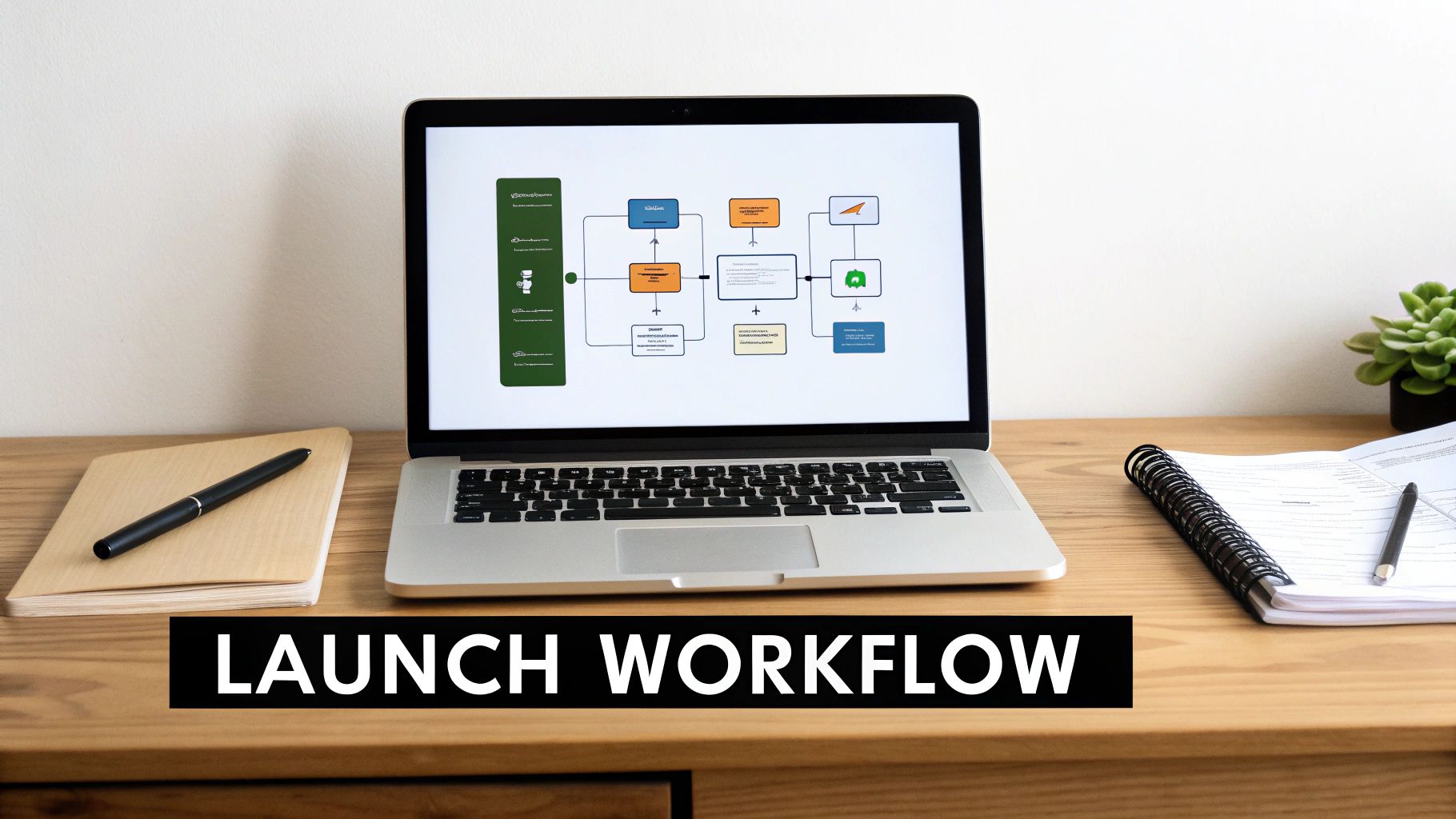
Jumping into business to business marketing automation can feel like a massive project, but it doesn't have to be. A structured, step-by-step approach turns this powerful initiative into a series of manageable tasks. Think of it less like building an engine from scratch and more like assembling a high-performance kit with clear instructions.
The key is to start small. Focus on solving one major pain point first, then build from there. This roadmap will guide you through the essential phases, ensuring you launch a strategy that delivers real, measurable results without the overwhelm.
For a deeper dive, our complete guide on marketing automation implementation offers even more detail.
Phase 1: Define Your Goals
Before you touch any software, you need to know what success looks like. What specific problem are you trying to solve? Vague goals like "get more leads" aren't going to cut it. You need clear, measurable objectives.
Your goals should be specific and tied to a business outcome. Here are a few solid examples:
- Reduce lead response time from 24 hours to under 5 minutes.
- Increase marketing qualified leads (MQLs) passed to sales by 20% in the next quarter.
- Improve email open rates for nurture campaigns by 15%.
These sharp, focused goals will guide every decision you make, from choosing the right tools to designing your first workflows. They give you a clear destination for your automation journey.
Phase 2: Map Your Customer Journey
Next, step into your customer's shoes. How do they go from discovering your brand to signing a contract? Mapping this journey is critical because it reveals the key touchpoints and moments where automation can make the biggest impact.
Don't overcomplicate this. A simple whiteboard session can outline the main stages, like Awareness, Consideration, and Decision. For each stage, identify the questions your prospects have and the content that answers them. This map becomes the blueprint for your automated nurturing sequences.
Phase 3: Choose the Right Tools
The market for automation tools is massive, but you don't need a complex, enterprise-level platform to get started. The best approach is to choose a tool that solves your most immediate pain point first.
For instance, if you’re manually downloading leads from Facebook Ads, a tool like LeadSavvy Pro that automates that specific task is a perfect starting point.
Start with a solution that offers a quick win. Solving a tangible problem builds momentum and demonstrates immediate ROI, making it easier to get buy-in for more advanced automation down the line.
Look for tools that are user-friendly, integrate with your existing systems (like your CRM or email provider), and can scale with you as your needs grow.
Phase 4: Prepare Your Content Assets
Automation runs on content. The customer journey map you created in Phase 2 will show you exactly what assets you need. These are the fuel for your nurturing engine, designed to educate and build trust with your prospects over time.
Your content arsenal might include:
- Welcome Emails: To make a strong first impression.
- Case Studies: To provide social proof and demonstrate results.
- Webinar Invitations: To engage prospects with in-depth educational content.
- Product Spec Sheets: For those in the final stages of their decision-making process.
Having these assets ready before you start building your workflows will make the entire process smoother and more effective right out of the gate.
Phase 5: Build and Launch Your First Workflows
Now it’s time to bring it all together. Start with a simple, high-impact workflow. A great first project is an automated welcome sequence for new leads from a specific source, like a webinar or a content download.
This initial workflow could be as straightforward as a three-email series sent over a week. The goal isn't perfection; it's progress. Launch your simple workflow, and then move to the final, ongoing phase.
Phase 6: Measure and Optimize
Marketing automation is not a "set it and forget it" tool. Once your first workflows are live, the real work begins. You need to continuously monitor your key metrics—open rates, click-through rates, and conversion rates—to see what’s working and what isn’t.
Use this data to A/B test your subject lines, content, and timing to constantly improve performance. This iterative process of measuring and refining is what turns a good automation strategy into a great one.
Automating Facebook Leads: A Practical Walkthrough
Theory is great, but let's be real—the true magic of business to business marketing automation happens when you see it fix a real-world headache. Let's walk through a super common scenario that drives B2B companies crazy: the slow, painful process of handling leads from Facebook Lead Ads.
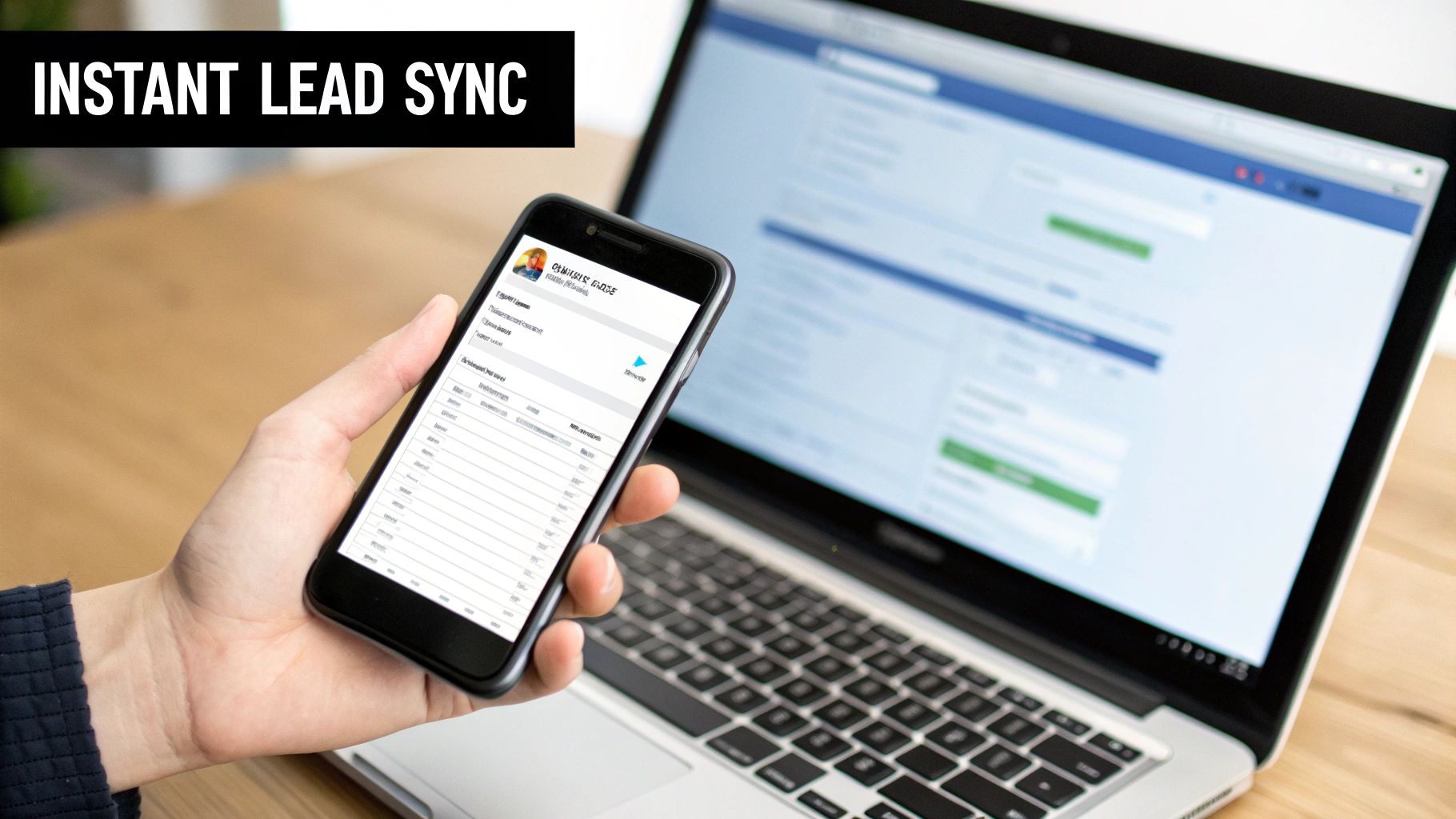
Picture a software company, let's call them "Innovate Solutions," running a Facebook campaign for their new project management tool. The ads are killing it, bringing in dozens of leads a day from managers who want a free demo. But behind the curtain? It's chaos.
The Manual Bottleneck
For the marketing manager at Innovate Solutions, part of her daily grind is a real chore. Twice a day, she has to log into Facebook Business Manager, find the right campaign, and manually download a CSV file of new leads.
This old-school method creates a ton of problems:
- Time Delays: A lead comes in at 9 AM but doesn't get seen until the afternoon download. By then, their initial excitement has worn off, and they've probably already checked out a competitor.
- Human Error: Copying and pasting data from a spreadsheet into the CRM is a perfect recipe for typos, wrong names, and lost info.
- Sales Frustration: The sales team gets leads in batches, hours late. They end up calling people who've gone cold or don't even remember filling out the form.
This isn't just annoying; it's costing them deals. Every minute of delay is a lost opportunity and a potential win for a faster rival.
The problem isn't the leads. It's the slow, unreliable handoff between marketing and sales. That gap is where revenue goes to die.
Implementing an Automated Solution
Innovate Solutions realizes this bottleneck is costing them big time and decides to dip their toes into automation. They pick a tool like LeadSavvy Pro that’s built to solve this exact problem. The setup is dead simple and takes just a few minutes.
1. Connecting the Source
First, they connect their company's Facebook Page to the platform. This is a one-time step that gives the tool permission to grab new leads the second they come in.
2. Choosing a Destination
Next, they decide where the leads should go. They create a simple Google Sheet and link it as the destination, creating a clean, central spot for the whole team to see the leads.
3. Setting Up Notifications
Finally, they set up an instant email alert to go out to the sales team's distribution list every time a new lead syncs. The email includes the lead's name, company, and contact details right in the body.
The Immediate Impact
The moment they flip the switch, everything changes. A manager sees their ad, clicks "Request a Demo," and fills out the form.
Instantly, this happens automatically:
- The lead's info pops up as a new row in their Google Sheet.
- An email lands in the sales team's inbox: "New Demo Request: John Doe from Acme Corp."
A salesperson sees the email and calls the prospect within five minutes. The prospect is blown away by the quick response, and the conversation is great because the demo is still fresh in their mind. As you dive deeper into automation, a solid guide on PPC for B2B lead generation can give you even more ideas for your acquisition funnel.
This simple workflow shows the immediate ROI of business to business marketing automation. By fixing one huge pain point, Innovate Solutions got rid of manual errors, slashed their response time, and built a seamless bridge between marketing and sales. It's the perfect foundation for a bigger automation strategy, all built on a quick, measurable win.
To see a step-by-step guide on this specific process, check out this post on how to automate Facebook leads.
Best Practices For Long-Term Automation Success
Getting your first workflow live is a great first step, but the real magic of business to business marketing automation happens over the long haul. A lot of businesses make the mistake of treating it as a "set it and forget it" tool, which seriously stunts its potential. The best strategies aren't static; they're living, breathing ecosystems that need regular attention to keep delivering growth and a solid ROI.
Think of your automation platform like a high-performance engine. You can't just turn it on and expect it to run perfectly forever. It needs regular tune-ups and high-quality fuel. This means you have to commit to a cycle of continuous improvement—always monitoring performance, trying out new ideas, and adapting to what your audience and business need.
Maintain Impeccably Clean Data
Your automation system is only as good as the data you put into it. Messy, outdated, or just plain wrong data is the single biggest thing that will sabotage your efforts. It leads to embarrassing personalization mistakes, segments that don't make sense, and ultimately, a damaged brand reputation. People change jobs, companies get acquired—old info becomes useless overnight.
Garbage in, garbage out. Clean data is the absolute bedrock of effective automation. It’s what makes sure your messages are relevant, your segmentation is sharp, and your sales team actually trusts the leads you send them.
To keep your database in top shape, you need a routine data hygiene process:
- Scrub your lists regularly to get rid of duplicate contacts and fix weird formatting issues.
- Use validation tools on your forms to stop bad information from ever getting into your system in the first place.
- Have a clear process for updating contact info the moment you find out it's changed.
This isn't just busy work. It’s the proactive maintenance that ensures your carefully crafted messages actually hit the right inbox at the right time.
Continuously Test and Optimize Everything
The assumptions you made when you built your first campaign? They’re just educated guesses. The only way to really know what resonates with your audience is to test, test, and test again. For long-term success, A/B testing isn't optional—it's essential. It takes the guesswork out of the equation and lets you make small, data-backed improvements that add up to big wins over time.
Start by testing the things that have the biggest impact on your email campaigns, like:
- Subject Lines: Try different lengths, tones (e.g., casual vs. formal), and personalization tokens.
- Call-to-Action (CTA): What works better? A red button or a blue one? "Learn More" or "Get the Guide"? Test it.
- Email Copy: Pit short, punchy copy against a more detailed, in-depth explanation.
But don't stop at emails. Test the timing and frequency of your workflows, too. Is a three-day delay between emails better than five? Only testing will tell you for sure. This constant loop of optimization is what turns a decent automation strategy into a revenue-generating machine. By always refining your approach based on what the data tells you, you ensure your system gets smarter and more effective, driving better results year after year.
Still Have Questions? Let's Clear Things Up.
Even after laying out a roadmap, it's natural to have a few more questions pop up before you dive in. It's a big topic! Here are some straight-up answers to the questions we hear most often.
What's the Real Difference Between B2B and B2C Marketing Automation?
While they might use similar software, the strategy behind them couldn't be more different. Think of it this way: B2C automation is all about the sprint. It’s geared toward quick, often emotional purchases with short sales cycles. Think abandoned cart reminders or flash sale notifications.
B2B, on the other hand, is a marathon. It’s built to manage complex relationships that can involve a whole committee of decision-makers over weeks, months, or even longer. The focus is on educating, building trust, and using lead scoring to figure out the perfect moment to bring in sales.
The core difference is the customer journey. B2C is a quick dash to a single sale. B2B is a long, calculated race to nurture a group of buyers toward a high-value partnership.
Is This Stuff Actually Worth It for a Small Business?
Absolutely. In fact, you could argue that small businesses stand to gain the most. When you're running a lean team, every single minute you claw back from tedious manual tasks is a minute you can reinvest in strategy, customer calls, or just thinking.
Automation is the great equalizer. It lets smaller companies deliver the kind of consistent, professional follow-up that used to be the exclusive domain of big corporations with massive teams. Starting with a simple, affordable tool to fix one major headache—like getting leads out of social media and into your system—is the perfect way to start. You get an immediate win without a massive upfront cost.
So, How Much Does This B2B Marketing Automation Cost?
The price tag can swing wildly. You've got the all-in-one enterprise platforms that can run you thousands of dollars a month, loaded with every feature imaginable. But then you have a whole world of powerful, specialized tools that cost a fraction of that, with many even offering free plans to get you started.
The key is to avoid paying for a freight train when you only need a handcart. Don't get distracted by a dozen features you won’t touch for a year. Start with a tool that solves your single biggest bottleneck right now. You’ll see a clear return on your investment, and you can always scale up as your business and your needs grow. This smart approach makes business to business marketing automation a real possibility for just about any budget.
Ready to stop wasting time downloading CSVs and start talking to more qualified prospects? LeadSavvy Pro automates your entire lead flow, syncing Facebook leads to wherever you need them in real-time. Sign up for a free plan and see the difference in minutes.